

Healing from Burnout: A Path to Renewal
Burnout doesn’t just drain energy - it reshapes how we experience work, relationships, and even ourselves. It’s not something that disappears with a weekend off. True healing requires a deeper reset. Recovering from burnout isn’t just about avoiding exhaustion but about rediscovering joy, purpose, and balance in life.
Breaking the Cycle of Burnout
- Redefining success - Often, burnout stems from an unsustainable definition of success - one that equates worth with constant productivity. True success should include well-being, creativity, and fulfillment, not just output. Shifting this mindset towards sustainable achievement, where rest and creativity are valued, is essential for long-term well-being.
- The role of play and curiosity – While burnout narrows our focus to mere survival, healing invites exploration. Engaging in hobbies, play, and non-work-related interests helps rebuild mental flexibility and joy, reigniting creativity in unexpected ways.
- Perceiving rest as a skill – Many people see rest as passive, but true rest - deep, restorative, and intentional - is an active skill. This includes not just sleep but mental rest (disconnecting from stressors), sensory rest (limiting overstimulation), and creative rest (giving yourself permission to step away from productivity and let inspiration flow naturally).
- Reconnecting with your body – Burnout often disconnects us from physical sensations, making fatigue and tension feel normal. Movement practices like stretching, mindful walks, or even deep breathing help reestablish that connection and signal safety to the nervous system.
- Creating a life that doesn’t require escape – Instead of constantly pushing toward the next vacation or weekend recharge, healing means designing daily routines that are sustainable and nourishing. This might involve setting boundaries, adjusting workloads, or integrating small daily rituals of joy and relaxation. A nourishing life isn’t one that constantly demands escape, but one that naturally supports balance, peace, and satisfaction.
Moving forward with intention
Burnout isn’t just a sign of overwork - it’s often a signal for change. It’s a wake-up call to slow down, reassess, and build a life where energy, creativity, and well-being coexist. Healing is not about returning to how things were before burnout; it’s about creating a new, healthier foundation - one that prioritizes sustainability, joy, and inner peace. It’s a commitment to living in a way that honors both ambition and well-being, ensuring that we don’t find ourselves in the same cycle again.
Burnout may feel like an ending, but in many ways, it can be the beginning of something better - a more aligned, intentional, and fulfilling life.


Harnessing Feedback: Elevating Employee Performance and Development
In the dynamic landscape of modern workplaces, the power of feedback cannot be overstated. Regular and constructive feedback serves as a cornerstone for employee development and performance improvement. In this blog post, we delve into the significance of feedback in driving professional growth and organizational success, while also sharing best practices for giving and receiving feedback effectively.
The Importance of Regular Feedback
Feedback is a catalyst for growth, providing individuals with valuable insights into their strengths, areas for improvement, and development opportunities. By offering timely and specific feedback, organizations can empower employees to enhance their performance, refine their skills, and achieve their full potential. Regular feedback fosters a culture of continuous learning and improvement, driving engagement, motivation, and ultimately, success.
Best Practices for Giving Feedback
Be Timely and Specific: Provide feedback promptly, ideally soon after the observed behavior or performance. Be specific and focus on actionable points, highlighting both strengths and areas for improvement. Concrete examples and evidence-based observations lend credibility to your feedback.
Focus on Behavior, Not Personality: When giving feedback, focus on behaviors rather than personality traits. Describe the impact of the behavior on outcomes or team dynamics, and offer suggestions for alternative approaches. Avoid making personal judgments or criticisms.
Use the Sandwich Approach: The sandwich approach involves framing constructive feedback between positive reinforcement. Start with positive feedback to acknowledge strengths, provide constructive criticism in the middle, and end on an encouraging note. This approach helps balance feedback and maintain a supportive tone.
Encourage Two-Way Communication: Feedback should be a dialogue rather than a monologue. Encourage recipients to ask questions, seek clarification, and share their perspective. Actively listen to their feedback and be open to constructive criticism yourself.
Offer Developmental Feedback: Instead of focusing solely on past performance, offer developmental feedback that guides future growth. Discuss goals, aspirations, and developmental opportunities, and collaborate on action plans for improvement.
Best Practices for Receiving Feedback
Stay Open-Minded: Approach feedback with an open mind and a willingness to learn and grow. Avoid becoming defensive or dismissive, and instead, view feedback as an opportunity for self-reflection and improvement.
Seek Clarification: If feedback is unclear or ambiguous, don't hesitate to seek clarification. Ask questions to better understand the feedback giver's perspective, and request specific examples or suggestions for improvement.
Express Appreciation: Regardless of the nature of the feedback, express appreciation for the input received. Acknowledge the feedback giver's effort and sincerity, and thank them for their insights.
Reflect and Take Action: Take time to reflect on the feedback received and consider how it aligns with your goals and aspirations. Identify actionable steps for improvement and proactively incorporate feedback into your development plan.
Follow Up: Follow up with the feedback giver to discuss progress and any changes implemented based on their feedback. Demonstrate your commitment to growth and improvement by actively addressing feedback received.
In conclusion, the power of feedback in driving employee development and performance management cannot be overstated. By embracing a culture of regular feedback, organizations can empower employees to thrive, grow, and contribute to organizational success. Whether giving or receiving feedback, adopting best practices such as timeliness, specificity, open-mindedness, and action-oriented follow-up is essential for maximizing the impact of feedback and fostering a culture of continuous improvement and excellence.

Decoding Decision-Making: Strategies for Informed Choices in the Workplace
Decisions, whether big or small, shape the trajectory of businesses and careers. Yet, the process of decision-making is often influenced by cognitive biases and flawed reasoning. In this blog post, we delve into the science of decision-making, exploring cognitive biases, decision-making processes, and strategies for making better, more informed decisions in the workplace.
Understanding Cognitive Biases
Cognitive biases are inherent tendencies in human thinking that can lead to systematic deviations from rationality. These biases often arise from mental shortcuts or heuristics that help us make quick decisions but may result in errors in judgment. Common cognitive biases include:
Confirmation Bias: Favoring information that confirms pre-existing beliefs.
Anchoring Bias: Relying too heavily on the first piece of information encountered.
Availability Bias: Overestimating the importance of information that is readily available.
Recognizing and mitigating these biases is essential for making sound decisions in the workplace.
Decision-Making Processes
Effective decision-making involves a systematic approach that considers relevant information, evaluates alternatives, and weighs potential outcomes. While there are various decision-making models, a commonly used framework is the rational decision-making model, which involves the following steps:
1. Identifying the Problem: Clearly define the decision to be made and the problem it seeks to address.
2. Gathering Information: Collect relevant data and information to inform the decision-making process.
3. Generating Alternatives: Brainstorm potential solutions or courses of action.
4. Evaluating Alternatives: Assess the pros and cons of each alternative based on criteria such as feasibility, cost, and impact.
5. Making the Decision: Select the best alternative based on the evaluation and judgment.
6. Implementing the Decision: Put the decision into action and monitor its outcomes.
While this model provides a structured approach, it's essential to remain flexible and adaptive, considering the dynamic nature of decision-making in complex environments.
Strategies for Informed Decision-Making
Seek Diverse Perspectives: Encourage diversity of thought by soliciting input from individuals with different backgrounds, experiences, and expertise. Considering diverse perspectives can uncover blind spots, challenge assumptions, and lead to more comprehensive decision-making.
Challenge Assumptions: Questioning assumptions and biases is critical for making informed decisions. Encourage a culture of critical thinking and inquiry, where individuals feel empowered to challenge conventional wisdom and explore alternative viewpoints.
Use Data and Evidence: Base decisions on data and evidence rather than relying solely on intuition or gut feelings. Invest in data analytics and decision support tools to gather and analyze relevant information, enabling data-driven decision-making.
Consider Long-Term Implications: Evaluate the potential long-term consequences of decisions beyond immediate outcomes. Consider factors such as sustainability, ethical implications, and alignment with organizational values and goals.
Embrace Experimentation: Embrace a culture of experimentation and learning by testing hypotheses and conducting pilot projects. Experimentation allows for iterative refinement and learning from failures, ultimately leading to more effective decision-making.
Reflect and Learn: After making decisions, take time to reflect on outcomes and learn from both successes and failures. Encourage feedback and continuous improvement to refine decision-making processes over time.
In conclusion, the science of decision-making involves understanding cognitive biases, following systematic decision-making processes, and implementing strategies to make better, more informed decisions in the workplace. By recognizing and mitigating biases, applying structured decision-making frameworks, and fostering a culture of critical thinking and learning, organizations can enhance decision-making effectiveness and drive positive outcomes. Decision-making is both an art and a science, requiring a combination of analytical rigor, creativity, and adaptability to navigate complex challenges and seize opportunities for growth and innovation.

Boosting Employee Motivation and Engagement: Strategies for Success
In today's competitive business landscape, one of the most significant assets a company can possess is a highly motivated and engaged workforce. Employee motivation and engagement not only contribute to individual satisfaction but also drive productivity, innovation, and overall organizational success. Understanding the factors that influence motivation and engagement, as well as implementing effective strategies to enhance them, is essential for fostering a positive work environment and maximizing employee performance.
Factors Driving Employee Motivation and Engagement:
- Recognition: Employees thrive on acknowledgment and appreciation for their contributions. Recognition can take various forms, including verbal praise, awards, bonuses, or promotions. When employees feel valued and recognized for their efforts, they are more likely to be motivated to perform at their best.
- Autonomy: Granting employees a degree of autonomy empowers them to make decisions and take ownership of their work. Autonomy fosters a sense of responsibility and encourages creativity and innovation. Giving employees the freedom to choose how they approach tasks can significantly increase their motivation and engagement levels.
- Meaningful Work: Employees are more engaged when they find meaning and purpose in their work. When individuals believe that their contributions align with the company's mission and values, they are more likely to be emotionally invested in their roles. Providing employees with opportunities to work on projects that resonate with their interests and values can lead to greater job satisfaction and commitment.
- Professional Development: Investing in employee growth and development demonstrates a commitment to their long-term success. Offering training programs, mentoring opportunities, and career advancement paths not only enhances employees' skills but also boosts their motivation and engagement by showing that their professional growth is valued by the organization.
Strategies for Increasing Engagement Levels:
- Open Communication: Establishing transparent communication channels allows employees to voice their concerns, share ideas, and provide feedback. Encourage open dialogue between managers and team members to foster trust and collaboration. Regular one-on-one meetings and team huddles provide opportunities for meaningful conversations and ensure that everyone feels heard and valued.
- Promote Work-Life Balance: Recognize the importance of work-life balance in maintaining employee well-being and preventing burnout. Encourage flexible work arrangements, such as telecommuting or flexible hours, to accommodate employees' personal needs and commitments. Providing wellness programs and resources can also support employees in achieving a healthy work-life balance.
- Empowerment and Decision-Making: Empower employees by involving them in decision-making processes that affect their work. Seek their input on projects, initiatives, and organizational changes to make them feel valued and invested in the outcomes. Empowerment fosters a sense of ownership and responsibility, leading to increased motivation and engagement.
- Regular Feedback and Recognition: Implement a culture of continuous feedback and recognition to reinforce positive behaviors and performance. Provide constructive feedback on time to help employees grow and improve. Additionally, celebrate achievements and milestones publicly to show appreciation for employees' hard work and dedication.
- Create a Positive Work Environment: Cultivate a positive and inclusive workplace culture where employees feel safe, respected, and supported. Encourage teamwork, collaboration, and camaraderie among colleagues. Recognize and address any issues or conflicts promptly to maintain a healthy work environment conducive to motivation and engagement.
In conclusion, fostering employee motivation and engagement is crucial for driving organizational success. By understanding the factors that influence motivation and implementing effective strategies to enhance engagement levels, companies can create a work environment where employees feel valued, empowered, and motivated to perform at their best. Investing in employee well-being and professional development not only benefits individuals but also contributes to the overall growth and success of the organization.


The Power of Soft Skills in IT: Unlocking Success Beyond Technical Expertise
The topic of soft skills usually comes up in any vocation that involves communicating with others. Of course, none of this is unintentional. Soft skills play a vital role in career success across various industries, transcending technical expertise alone. These skills enable professionals to effectively communicate, collaborate, solve problems, lead teams, adapt to change, and manage emotions.
In this article, we will delve into the importance of key soft skills such as communication, problem-solving, teamwork, leadership, adaptability, and emotional intelligence. We will explore what each skill entails, and offer actionable strategies to develop and improve these skills for professional growth and success in any industry.
Communication Skills: Effective communication involves the ability to convey ideas clearly, listen actively, and adapt communication styles to different audiences. It includes verbal and written communication, as well as non-verbal cues. To improve communication skills, professionals can practice active listening, seek feedback, and engage in public speaking opportunities. They can also enhance their writing skills by seeking guidance from mentors or taking courses related to that.
Problem-Solving Abilities: Problem-solving skills involve critical thinking, analytical reasoning, and the ability to identify and implement effective solutions to complex challenges. It requires breaking down problems, analyzing data, and considering multiple perspectives. Professionals can improve problem-solving abilities by practicing structured problem-solving methodologies, such as the 5 Whys or SWOT analysis. Engaging in puzzles, brain teasers, or strategy games can also sharpen problem-solving skills.
Teamwork and Collaboration: Teamwork involves effectively collaborating with colleagues, respecting diverse perspectives, and contributing to collective goals. It includes active participation, effective communication, and the ability to manage conflicts constructively. To enhance teamwork skills, professionals can actively engage in team projects, foster open communication, and demonstrate empathy towards team members' ideas and concerns. Participating in team-building activities and workshops can also strengthen collaboration abilities.
Leadership Qualities: Leadership skills encompass taking initiative, motivating others, and guiding teams toward shared goals. Leadership can be demonstrated at any level of an organization and involves influencing others positively. Professionals can develop leadership qualities by seeking opportunities to lead projects or initiatives, taking responsibility, and providing guidance to colleagues. Engaging in leadership development programs or seeking mentorship from experienced leaders can also foster leadership growth.
Adaptability and Continuous Learning: Adaptability involves embracing change, being open to new ideas, and continuously updating skills to thrive in evolving environments. It includes a growth mindset, flexibility, and the ability to learn from experiences. Professionals can cultivate adaptability by staying updated on industry trends, seeking new learning opportunities, and being open to feedback. Embracing challenging assignments or unfamiliar tasks can also foster adaptability.
Emotional Intelligence: Emotional intelligence involves self-awareness, empathy, and effective management of emotions in oneself and others. It includes recognizing and understanding emotions, managing relationships, and exhibiting empathy. To enhance emotional intelligence, professionals can practice self-reflection, actively listen to others, and develop empathy by seeking to understand diverse perspectives. Participating in emotional intelligence training programs or workshops can further support its development.
Soft skills are essential for career success across industries, complementing technical expertise. By developing and honing communication, problem-solving, teamwork, leadership, adaptability, and emotional intelligence skills, professionals can position themselves for growth and achievement. The power of soft skills goes beyond technical knowledge, opening doors to greater opportunities and long-term professional success in any industry.
Last, but not least, it helps to shape and develop who we are as individuals and how we can behave in a better way with the people around us.

The Benefits of Choosing ImpacT Hire as Your Recruitment Agency
Finding and hiring the right talent is crucial for any organization's success and growth. However, the recruitment process can be complex, time-consuming, and resource-intensive. That's where ImpacT Hire, a leading recruitment agency, comes in. In this article, we will explore the numerous advantages of choosing ImpacT Hire for your company and how our services can revolutionize your hiring strategies.
Access to Extensive Networks and Top-talent
At ImpacT Hire, we have an extensive network and database filled with experienced professionals. Our industry connections and expertise allow us to tap into a diverse pool of qualified candidates who may not be actively seeking employment through conventional channels. By partnering with us, your company gains access to this vast network, increasing the likelihood of finding the perfect fit for your organization.
Time and Cost Efficiency
Recruiting the right talent requires significant time and resources. Crafting job descriptions, screening resumes, conducting interviews, and negotiating offers can be overwhelming for internal HR teams. Engaging ImpacT Hire alleviates this burden, allowing your team to focus on core business activities. Our streamlined hiring process saves your company valuable time and resources, enabling a more efficient and cost-effective recruitment process.
Specialized Industry Knowledge
ImpacT Hire specializes in various industries and sectors, which translates into a deep understanding of market trends, skill requirements, and talent availability. Whether you operate in technology, healthcare, finance, or any other sector, partnering with us ensures that you benefit from our insights and understanding of your unique hiring needs. Our specialized industry knowledge enables a more targeted and successful recruitment process.
Expertise in Candidate Assessment and Selection
Identifying the right candidate goes beyond evaluating resumes. At ImpacT Hire, we have honed our skills in candidate assessment and selection. We utilize various methods to identify individuals who not only possess the necessary qualifications but also align with your company's culture and values. Our comprehensive interviews, skill assessments, and reference checks ensure that candidates are thoroughly vetted, increasing the likelihood of finding top-quality talent.
Confidentiality and Discretion
We understand that some hiring processes require confidentiality, especially for senior or sensitive positions. ImpacT Hire offers a level of confidentiality and discretion that can be challenging to maintain when hiring internally. We prioritize maintaining the privacy of both the company and the candidates involved, ensuring a confidential hiring process with professionalism and integrity.
Long-Term Partnership and Post-Hire Support
Collaborating with ImpacT Hire can lead to a long-term partnership that extends beyond the initial hiring process. We strive to understand your company's culture, goals, and future talent needs. By building this relationship, we can support your company's growth by providing ongoing talent acquisition strategies, market insights, and succession planning. Additionally, our post-hire support ensures a smooth transition for new employees, facilitating their integration into your company.
Choosing ImpacT Hire as your recruitment agency can revolutionize your company's talent acquisition efforts. With access to extensive networks, top talent, specialized industry knowledge, expertise in candidate assessment, time and cost efficiency, confidentiality, long-term partnership, and post-hire support, we ensure that your organization remains competitive in attracting and retaining the best talent.
Embrace the benefits of partnering with ImpacT Hire and unlock the potential for sustained growth and success in your company!

Interviewing Advice. Techniques for Increasing Your Performance
Mastering the art of job interviews is crucial for professionals aiming to grab better positions in today's competitive market. In this article, we provide practical advice and essential tips to help professionals excel in their job interviews. From technical interview preparation (if applicable) to addressing common interview questions, we offer guidance on how to effectively showcase skills, experiences, and accomplishments, ultimately increasing the chances of landing the job position that you desire.
Research the Company and Role
In the same way that interviewers are required to prepare for a candidate's interview before seeing him, candidates themselves should be informed of where they are applying and why. Here there are our suggestions:
- Explore the company's website, blog, and social media profiles to gain insights into their culture, values, recent projects, and company.
- Understand the specific requirements of the role you're applying for, mentioned in the job description and/or during the initial conversations with the hiring team.
- Research the company's competitors and industry trends to demonstrate your industry knowledge during the interview.
Technical Interview Preparation (for IT roles)
- Review fundamental concepts and technologies relevant to the role. Practice coding exercises and algorithms in languages commonly used in the position.
- Familiarize yourself with the company's tech stack and any specific tools or frameworks they mention in the job description.
- Practice your skills by participating in coding challenges.
Behavioral Interview Questions
Prepare examples that showcase your skills, experiences, and achievements. Use the STAR (Situation, Task, Action, Result) method to structure your responses.
*The STAR method requires you to describe the Situation, Task, Action, and Result of a particular experience or accomplishment.
- Be ready to discuss projects where you faced challenges, resolved conflicts, or implemented innovative solutions.
- Highlight instances where you demonstrated leadership, teamwork, adaptability, and effective communication.
Showcase Your Projects and Contributions
- Prepare a portfolio or a list of projects that demonstrate your abilities and contributions.
- Clearly explain the problem you solved, your role in the project, the hard skills used, and the impact of your work.
- If possible, provide tangible results or metrics that demonstrate the success of your projects, such as increased efficiency, cost savings, or user satisfaction.
Effective Communication and Presentation
- Practice explaining concepts in a simple and concise manner to both technical (if applicable) and non-technical interviewers.
- Use visual aids or diagrams, if appropriate, to enhance your explanations.
- Listen actively to the interviewer's questions and provide thoughtful and well-structured responses.
Problem-solving and Critical Thinking
- Emphasize your problem-solving skills by explaining your approach to complex challenges.
- Clearly articulate the steps you took to analyze the problem, gather information, identify potential solutions, and implement the best course of action.
- Highlight instances where you demonstrated creativity, resourcefulness, and the ability to think outside the box.
Ask Relevant Questions
- Prepare a list of insightful questions to ask the interviewer about the company, team dynamics, projects, or any specific technologies or methodologies they use.
- Show curiosity in the role and the company's future direction.
- Avoid asking questions that can be easily found on the company's website or in the job description!
Body Language and Professionalism
- Maintain good eye contact, sit upright, and use confident body language throughout the interview.
- Listen attentively to the interviewer, and avoid interrupting or speaking too quickly.
- Be mindful of your tone of voice, ensuring it is clear, professional, and enthusiastic.
Remember, preparation is key to a successful interview. By conducting thorough research, practicing technical and behavioral questions, effectively communicating your experiences, and showcasing your skills and achievements, you'll be well-equipped to excel in job interviews.

Using Employer Branding to Its Full Potential in IT Recruitment
In today's rapidly evolving IT industry, the significance of employer branding cannot be overstated.
At ImpacT Hire, we understand the transformative impact that a strong employer brand has on IT recruitment. By cultivating a compelling brand, organizations can attract top IT talent, foster employee engagement and loyalty, and gain a competitive edge. In this article, we will explore the multitude of benefits that effective employer branding brings to companies.
Attracting Top IT Talent
A strong employer brand helps companies attract the best IT professionals in the industry. When a company is known for its positive work culture, growth opportunities, and engaging projects, it becomes an attractive destination for talented individuals seeking new opportunities. With increased competition for IT talent, a compelling employer brand gives organizations an edge in attracting top candidates who align with their values and goals.
Competitive Advantage
In a highly competitive IT job market, employer branding provides a distinct competitive advantage. It differentiates the organization from its competitors by showcasing its unique culture, values, and opportunities. This advantage not only helps in attracting talent but also positions the company as an employer of choice among IT professionals. A strong employer brand can sway candidates' decisions in favor of the company, even when faced with competing job offers.
Increased Employee Engagement and Retention
Effective employer branding contributes to higher levels of employee engagement and retention. When employees feel proud of their organization and its brand, they become more motivated and committed to their work. Engaged employees are more likely to stay with the company, reducing turnover costs and ensuring stability within the IT team. A positive employer brand fosters a sense of loyalty and belonging, leading to a higher retention rate of skilled IT professionals.
Enhanced Reputation and Industry Recognition
A strong employer brand builds a positive reputation in the IT industry, which contributes to industry recognition. When a company is known for its commitment to employee well-being, career development, and a supportive work environment, it gains credibility and respect within the IT community. This recognition attracts not only top IT talent but also potential clients and partners who value the company's positive brand image.
Cost and time Savings in Recruitment:
Investing in employer branding can result in long-term cost savings in recruitment efforts. A well-established employer brand creates a pool of qualified and interested candidates who are more likely to proactively seek opportunities within the organization. This saves time and effort in the selection process. Isn't it always about time?
Moreover, a positive employer brand leads to more referrals from satisfied employees, resulting in a higher quality and more cost-effective candidate pipeline.
In the dynamic and talent-driven IT industry, investing in employer branding is a strategic move that can lead to long-term success and growth.
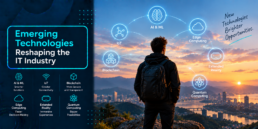
Emerging Technologies Reshaping the IT Industry
The IT industry is characterized by continuous innovation and the emergence of disruptive technologies that have the potential to reshape the landscape. In this article, we will explore a selection of upcoming technologies that are poised to revolutionize the IT sector even more. We will delve into their unique advantages, limitations, and the impact they can have on various sectors, particularly within the IT industry. By understanding the potential of these technologies, IT professionals can gain valuable insights into their adoption challenges and prepare for the future of the industry.
Artificial Intelligence (AI) and Machine Learning (ML)
AI and ML enable automation, predictive analytics, and data-driven decision-making, revolutionizing the way IT professionals approach tasks and processes. They have the potential to streamline operations, enhance efficiency, and improve customer experiences. AI-powered chatbots and virtual assistants can transform customer service and support in the IT sector, enabling round-the-clock assistance and personalized interactions.
However, they require extensive training and quality data, and ethical considerations around bias and privacy need to be addressed. Continuous updates and monitoring are essential for these technologies.
Internet of Things (IoT)
IoT connects devices, systems, and data sources, leading to increased connectivity and data availability. In the IT sector, IoT offers new opportunities for monitoring and managing networks, enhancing cybersecurity measures, and optimizing system performance. IT professionals can leverage IoT to create intelligent, interconnected ecosystems that improve operational efficiency, enable predictive maintenance, and drive innovation.
However, security and privacy concerns arise due to the vast amount of shared data. Interoperability challenges and scalability issues may also arise.
Blockchain Technology
Blockchain technology offers secure and transparent transactions, transforming various aspects of the IT industry. In the realm of cybersecurity, blockchain can enhance data integrity and privacy, enabling secure transactions and identity verification. It has the potential to revolutionize digital currency and financial transactions, providing decentralized and efficient solutions. The IT sector can leverage blockchain for secure data management, supply chain transparency, and smart contract execution.
However, scalability and regulatory frameworks remain challenges. User education and awareness are necessary for understanding its potential benefits and limitations.
Edge Computing
Edge computing brings processing power closer to data sources, reducing latency and enabling real-time analysis. In the IT sector, edge computing can significantly impact data management and processing, especially in industries such as IoT, autonomous vehicles, and real-time analytics. It allows for faster decision-making, reduced network traffic, and improved user experiences, enhancing the overall efficiency of IT systems.
However, managing a distributed infrastructure and ensuring data synchronization poses challenges. Scalability and standardization need attention.
Extended Reality (XR)
XR technologies, including virtual reality (VR), augmented reality (AR), and mixed reality (MR), have the potential to revolutionize the IT sector by enhancing user experiences, training programs, and visualization techniques. IT professionals can leverage XR to develop immersive training simulations, virtual collaboration environments, and engaging customer interactions. XR can also play a significant role in remote assistance, design prototyping, and virtual tours.
However, cost and infrastructure requirements can be a barrier. User acceptance and privacy concerns related to data capture need attention.
Quantum Computing
Quantum computing has the potential to revolutionize data processing, enabling significantly faster calculations and solving complex problems. In the IT sector, quantum computing can transform areas such as cryptography, optimization, and scientific simulations. IT professionals can explore new algorithms, develop advanced encryption methods, and leverage quantum computing to tackle computationally intensive tasks.
However, practical quantum computers are still in the early stages. The development of quantum algorithms and programming languages requires specialized expertise. Quantum security methods need to keep pace with advancements.
These technologies hold immense potential for transforming the IT industry. AI and ML can revolutionize decision-making processes and enhance customer experiences. IoT offers connectivity and data insights, improving network management and optimization. Blockchain enhances security and transparency in transactions. Edge computing enables real-time analysis and faster decision-making. XR technologies provide immersive experiences and innovative applications. Quantum computing has the potential to revolutionize complex problem-solving.
By understanding the advantages, limitations, and impact of these technologies, IT professionals can position themselves as pioneers in adopting and leveraging these innovations to drive the industry forward.

The Rise of DevOps: Bridging the Gap between Development and Operations
In today's fast-paced IT landscape, where speed, agility, and collaboration are essential, DevOps has emerged as a transformative approach that bridges the gap between development and operations teams. DevOps emphasizes collaboration, automation, and continuous integration and delivery to enable organizations to deliver software faster, more reliably, and with improved quality. In this article, we will explore the concept of DevOps and its growing importance in the IT industry. We will discuss the benefits of adopting DevOps practices, tools, and methodologies, as well as strategies for fostering a collaborative DevOps culture within organizations.
Understanding DevOps
DevOps is a cultural and organizational approach that brings together development and operations teams to collaboratively plan, develop, test, deploy, and monitor software applications. It emphasizes breaking down silos, fostering communication and collaboration, and implementing automation throughout the software development lifecycle.
Benefits of Adopting DevOps Practices
- Improved Collaboration: DevOps promotes cross-functional collaboration and communication between development, operations, and other teams involved in the software development process. This collaboration leads to shared goals, faster decision-making, and reduced friction between teams.
- Accelerated Delivery: DevOps enables organizations to deliver software updates and new features at a rapid pace. Continuous integration and continuous delivery (CI/CD) pipelines automate the build, test, and deployment processes, reducing manual errors and streamlining release cycles.
- Enhanced Quality and Stability: DevOps practices, such as automated testing and monitoring, help identify and address issues early in the development process. Continuous monitoring and feedback loops enable quick detection and resolution of problems, resulting in higher software quality and stability.
- Increased Efficiency and Productivity: Automation and standardized processes in DevOps eliminate repetitive and manual tasks, freeing up time for teams to focus on innovation and higher-value activities. By reducing bottlenecks and delays, organizations can achieve greater efficiency and productivity.
- Greater Scalability and Resilience: DevOps principles enable organizations to build scalable and resilient systems that can handle increased workloads and adapt to changing demands. Infrastructure as code (IaC) and cloud technologies facilitate the dynamic provisioning and scaling of resources.
- Improved Customer Experience: DevOps emphasizes delivering customer value by continuously incorporating feedback and iterating on software features. This iterative approach ensures that customer needs are met, leading to an enhanced user experience and increased customer satisfaction.
Fostering a Collaborative DevOps Culture
- Communication and Collaboration: Encourage open and transparent communication channels between development, operations, and other stakeholders. Foster a culture of trust, where teams can openly share ideas, feedback, and concerns.
- Knowledge Sharing and Learning: Promote cross-training and knowledge-sharing initiatives to help team members gain a broader understanding of different roles and technologies. Encourage the adoption of shared tools, practices, and documentation.
- Automation and Tooling: Invest in automation tools and technologies to streamline processes and reduce manual effort. Automate repetitive tasks, such as build, testing, deployment, and monitoring processes, to improve efficiency and reliability.
- Continuous Improvement: Foster a culture of continuous improvement by regularly reviewing and optimizing processes, seeking feedback from teams and stakeholders, and incorporating lessons learned into future iterations.
- DevOps Training and Education: Provide training and educational resources to help team members develop the necessary skills and knowledge for DevOps practices and technologies. Encourage certification programs and attendance at conferences or industry events.
DevOps has revolutionized the IT industry by bridging the gap between development and operations teams, enabling faster and more reliable software delivery. Fostering a collaborative DevOps culture requires effective communication, knowledge sharing, automation, and a commitment to continuous improvement. Embracing DevOps principles and investing in the necessary tools and training can empower organizations to thrive in today's highly competitive IT landscape, driving innovation and delivering exceptional value to customers.